반응형

Quick Answer

Getting from Incheon Airport to Seoul is easy once you choose based on where you’re actually staying.
Seoul Station → AREX Express
Hongdae → AREX All-Stop Train
Airport bus stops near your hotel → Airport Limousine Bus
Heavy luggage, late arrival or group travel → Taxi
The fastest option on paper is not always the easiest way to your hotel door. AREX Express currently takes about 43 minutes from Terminal 1 and 51 minutes from Terminal 2 to Seoul Station.
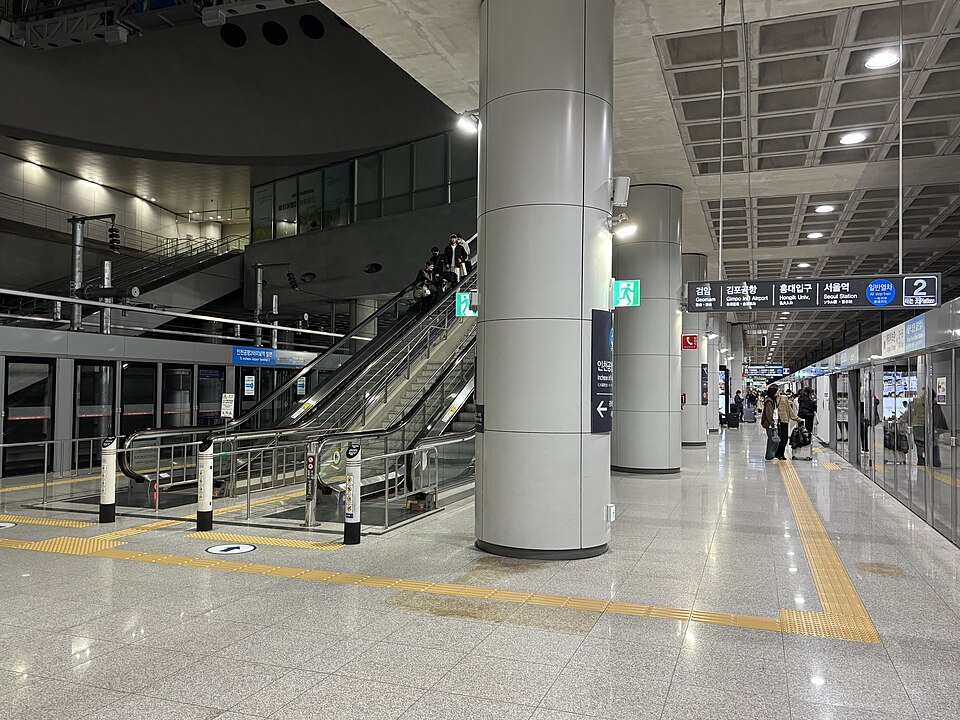
AREX platform at Incheon International Airport Terminal 1 for trains to Seoul
Photo: MNXANL / Wikimedia Commons / CC BY-SA 4.0

Incheon Airport to Seoul: Your Options at a Glance

AREX Express
₩13,000 / 43 min from T1 / 51 min from T2
Best for: Seoul Station
 
AREX All-Stop
₩4,750 from T1 / ₩5,350 from T2 to Seoul Station
About 59 min from T1 / 66 min from T2
Best for: Hongdae and budget travel
 
Airport Limousine Bus
Many major routes are around ₩17,000–₩18,000
Best for: hotels close to a bus stop
 
Taxi
Fare depends on destination and traffic
Best for: luggage, groups and late arrivals
The question isn’t simply, “Which one is fastest?”
 
It’s:
 
Which one gets me closest to where I’m actually staying?
 
AREX’s latest official fare table lists Seoul Station at ₩4,750 from T1 and ₩5,350 from T2 on the All-Stop service.
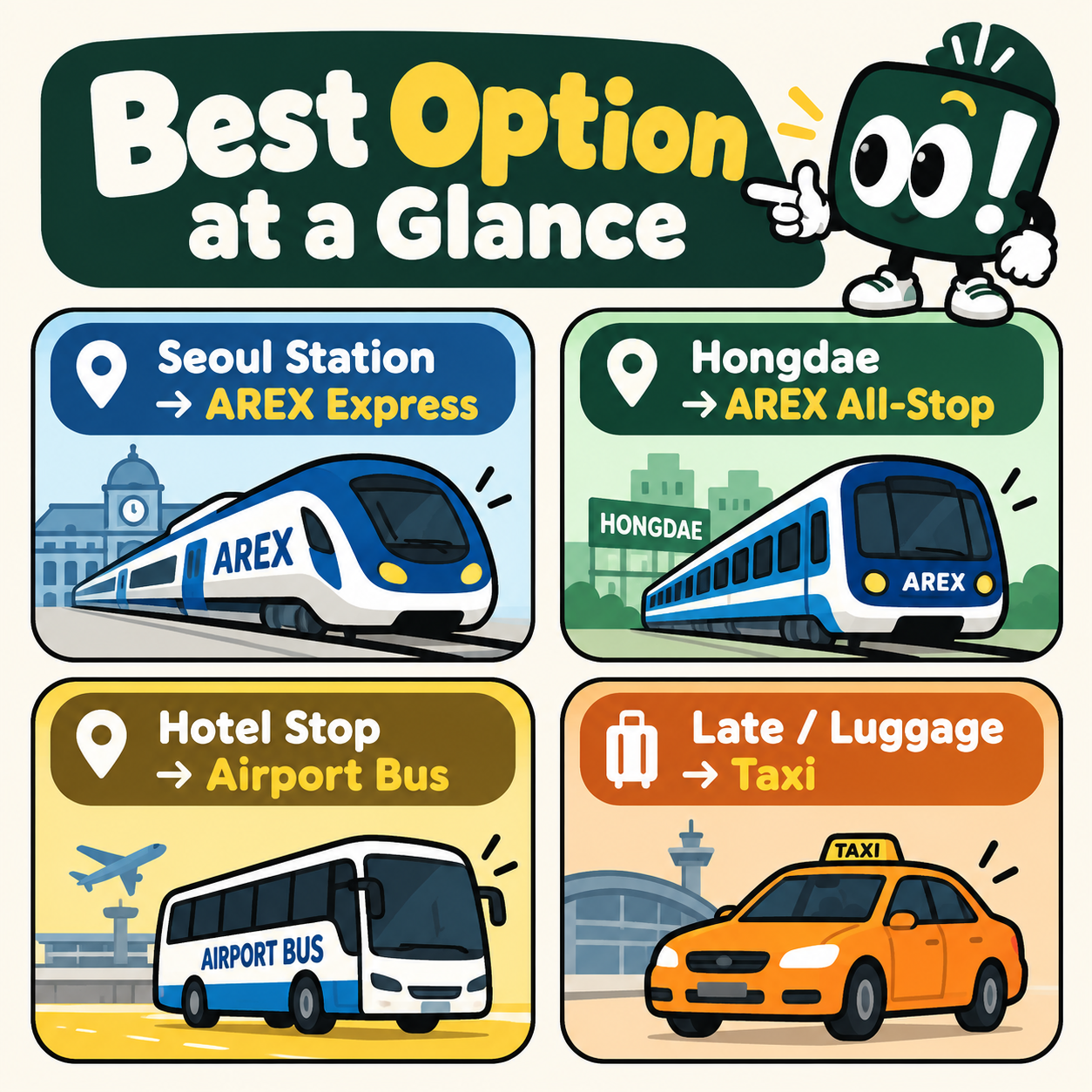
 

Best transport options from Incheon Airport to Seoul Station, Hongdae, hotels and late-night destinations


AREX Express: Best for Seoul Station

 
The AREX Express runs non-stop between Incheon Airport and Seoul Station.
 
Current travel times are approximately:

  • Terminal 1 → Seoul Station: 43 minutes
  • Terminal 2 → Seoul Station: 51 minutes

The adult one-way fare is ₩13,000.
 
If you’re staying near Seoul Station, this is one of the simplest options.
 
But remember: if your hotel is somewhere else, arriving at Seoul Station may still mean another subway ride, taxi or walk.


AREX All-Stop: Better for Hongdae

 
The AREX All-Stop Train is slower, but for some travelers it is actually more convenient.
 
Most importantly:
 
It stops directly at Hongik University Station.
 
So if you’re staying in Hongdae, taking the Express all the way to Seoul Station and then traveling back usually makes little sense.
 
It also stops at useful stations including Digital Media City, Gongdeok and Gimpo International Airport. Seoul’s official guide lists about 59 minutes from T1 and 66 minutes from T2 to Seoul Station.
 
If you’re not sure which transit card to use after arriving:
→ Read next:
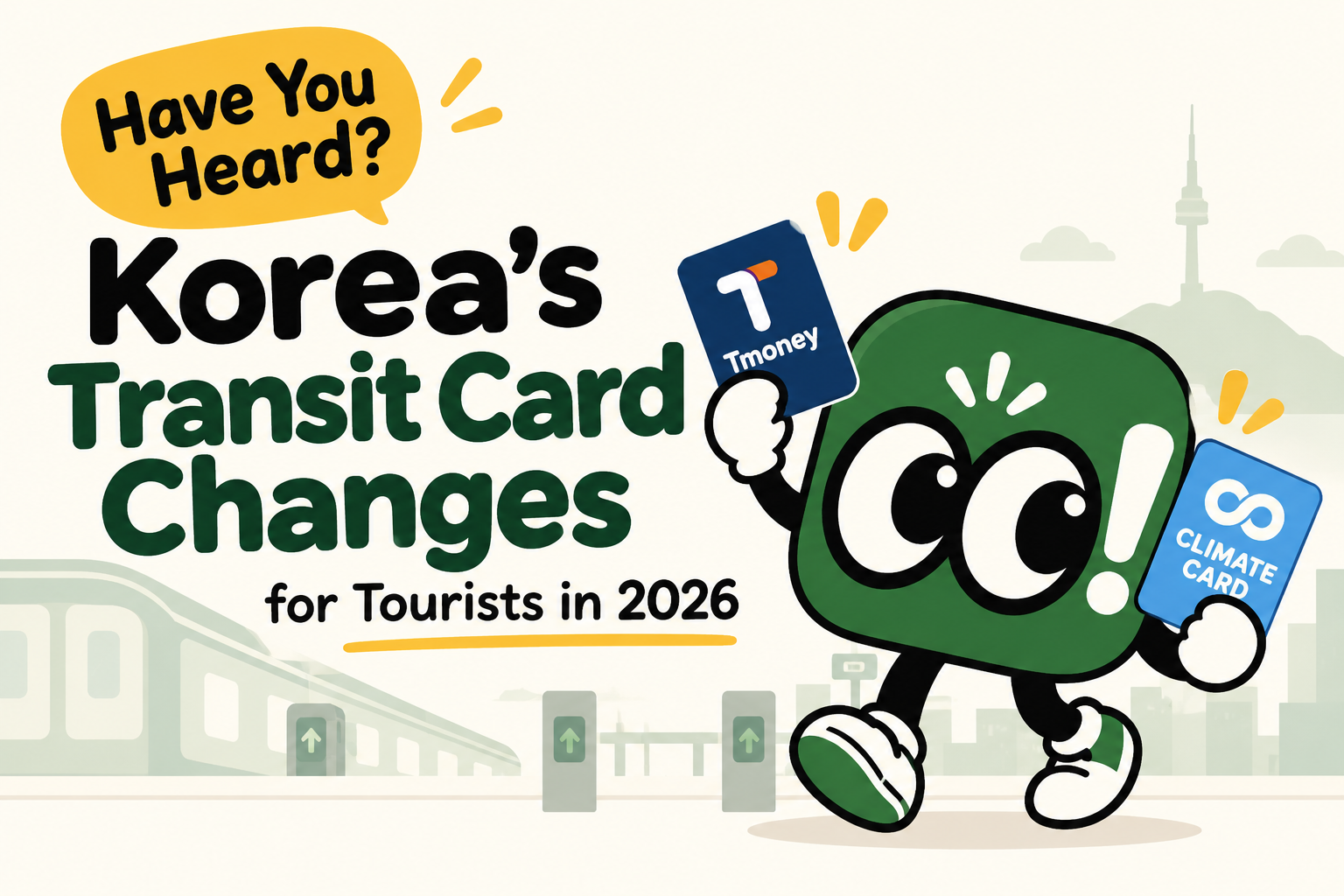
    Have You Heard? Korea’s Transit Card Changes for Tourists in 2026


Airport Limousine Bus: Best When It Stops Near Your Hotel

 
Don’t dismiss the airport bus just because the train looks faster.
 
If a bus stops close to your hotel, it can save you from:
 
train → transfer → stairs → walk → suitcase
 
For example, Bus 6001 serves areas including Seoul Station, Hoehyeon, Myeongdong and Chungmuro. Its current adult fare is ₩17,000.
 
There’s also an important 2026 change:
 
When boarding an Airport Limousine bus at Incheon Airport, buy your ticket before getting on.
 
Airport Limousine made advance ticket purchase mandatory from March 5, 2026. Tickets are available from staffed counters and ticket machines at the airport.


👀 Looky’s Local Tip

 
Don’t compare only airport → central Seoul.
 
Compare:
 
airport → your actual hotel door
 

  • Staying in Hongdae?
    → All-Stop AREX


  • Staying near Seoul Station?
    → AREX Express


  • Airport bus stops right beside your hotel?
    → The bus may be easier

 
That last transfer with luggage can matter more than saving 10 minutes on the train.


What About a Taxi?

 
A taxi is the easiest door-to-door option.
 
It makes the most sense if you:

  • have several large suitcases
  • are traveling with children or several people
  • arrive very late
  • want the simplest transfer possible

Seoul’s official guide currently estimates a regular taxi from Incheon Airport to Myeongdong at around ₩47,000–₩52,000, with an airport expressway toll added separately. Actual fares vary with traffic and destination.
 
International Taxi also offers fixed airport-to-Seoul zone fares. Sedan fares currently range from ₩70,000 to ₩95,000, depending on the part of Seoul.


How to Get a Taxi at Incheon Airport

 
You do not need to accept a ride from anyone approaching you inside the terminal.

  1. Follow the official Taxi signs after leaving arrivals.
  2. Go to the designated taxi stand outside.
  3. Join the queue for the taxi type you want.
  4. Show the driver your hotel name and address.

 
Having the address saved in Korean is useful.
 
Incheon Airport specifically warns passengers about illegal solicitation and overcharging by vehicles posing as taxis. International Taxi pickup is currently at 4C in Terminal 1 and 3C in Terminal 2.
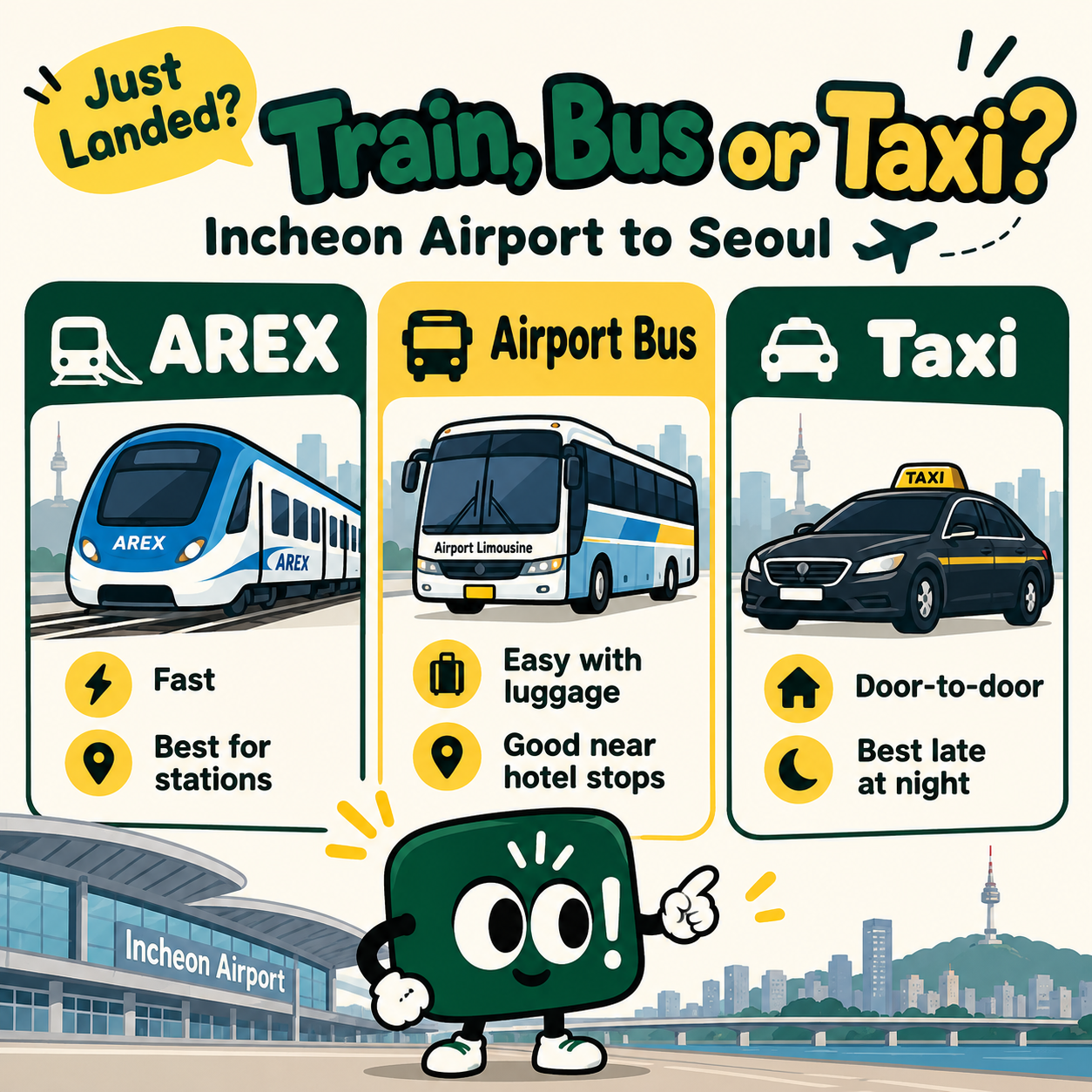
 

AREX train, airport bus and taxi comparison from Incheon Airport to Seoul


Tourists Often Miss This


AREX Means Two Different Trains

Express → non-stop to Seoul Station
All-Stop → cheaper and stops at Hongdae and other stations
 
Make sure you’re buying the one you actually need.
 

Your Terminal Matters

Incheon Airport has Terminal 1 and Terminal 2.
Travel times, fares and boarding locations can differ, so check your terminal before planning your route.
 

Late-Night Arrivals Need a Backup Plan

Normal AREX and airport-bus services do not run all night.
If your flight arrives very late, check the official schedule before departure. A taxi may be the simplest option.


FAQ

Q. Is AREX Express always the best way to Seoul?

No.
It’s excellent for Seoul Station, but the All-Stop Train or airport bus may be easier for other neighborhoods.

Q. Should I take AREX Express to Hongdae?

Usually not.
The All-Stop Train stops directly at Hongik University Station.

Q. How much is AREX Express in 2026?

The current adult one-way fare is ₩13,000.

Q. Can I take a taxi without booking in advance?

Yes.
Use the official taxi stands outside the airport arrivals area rather than accepting unsolicited ride offers.


Bottom Line

 
Seoul Station → AREX Express

Hongdae → AREX All-Stop

Bus stop near your hotel → Airport Limousine Bus

Lots of luggage, group travel or late arrival → Taxi
 
The best airport transfer isn’t necessarily the fastest option.
 
Choose the one that gets you closest to your hotel with the least hassle.


Sources & Last Updated

Last updated: September 29, 2026

  • AREX — Official Passenger Fare Information
  • Seoul Metropolitan Government — Getting to Seoul from Incheon Airport
  • Incheon International Airport — Taxi Guide
  • Airport Limousine Co. — Official Routes, Fares and Ticket Information
  • Seoul Metropolitan Government — Taxi / International Taxi Fare Guide

Look What I Found! — Korea Local Tips

반응형
반응형


Quick answer:

Korea’s transit card system is changing in 2026, but Seoul’s Climate Card is not disappearing completely.

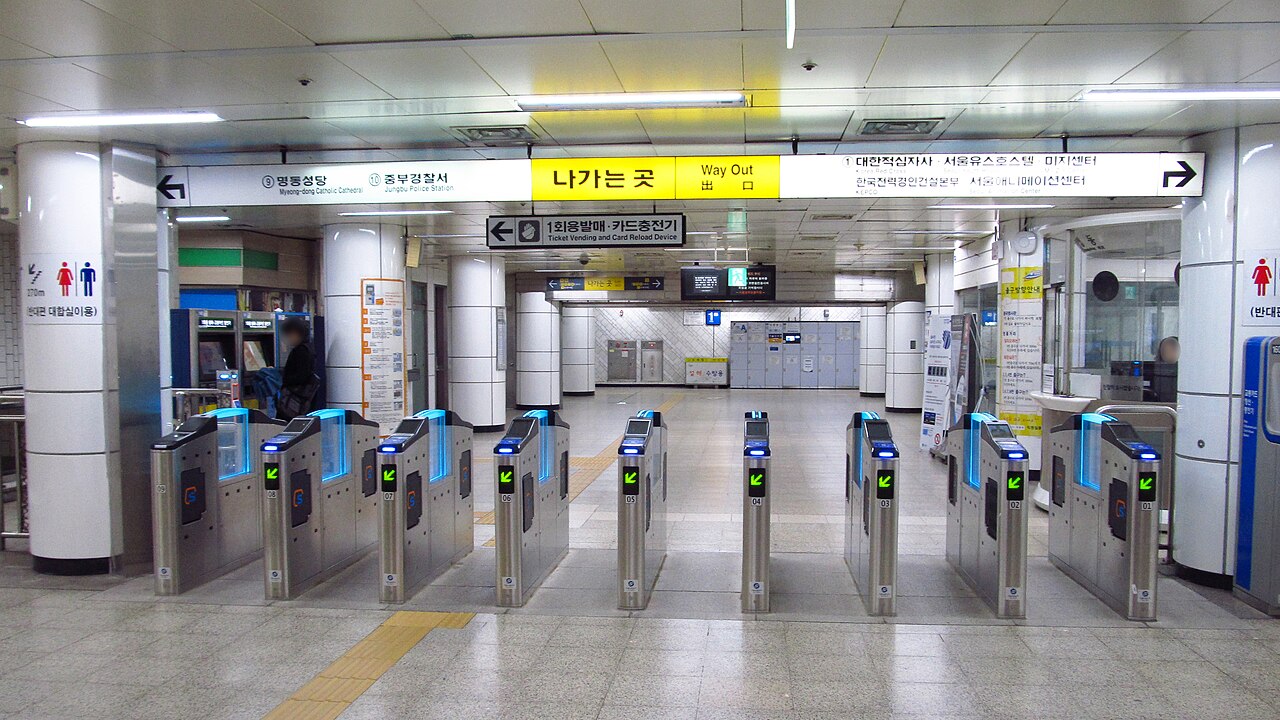
Ticket gates at Myeongdong Station on Seoul Subway Line 4

Photo:
LERK
/ Wikimedia Commons
/ CC BY-SA 4.0


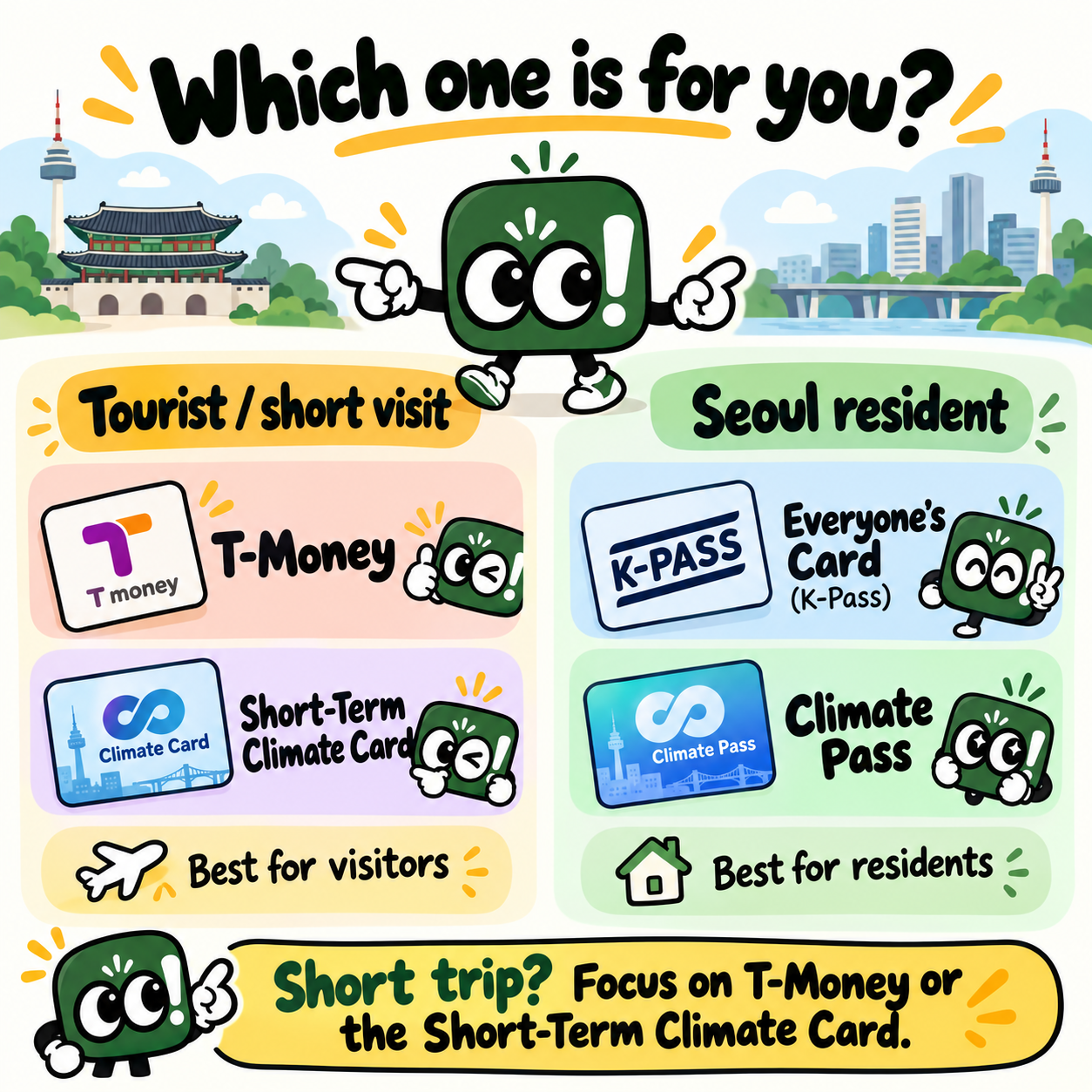
If you’re visiting Korea, the choice is still fairly simple:

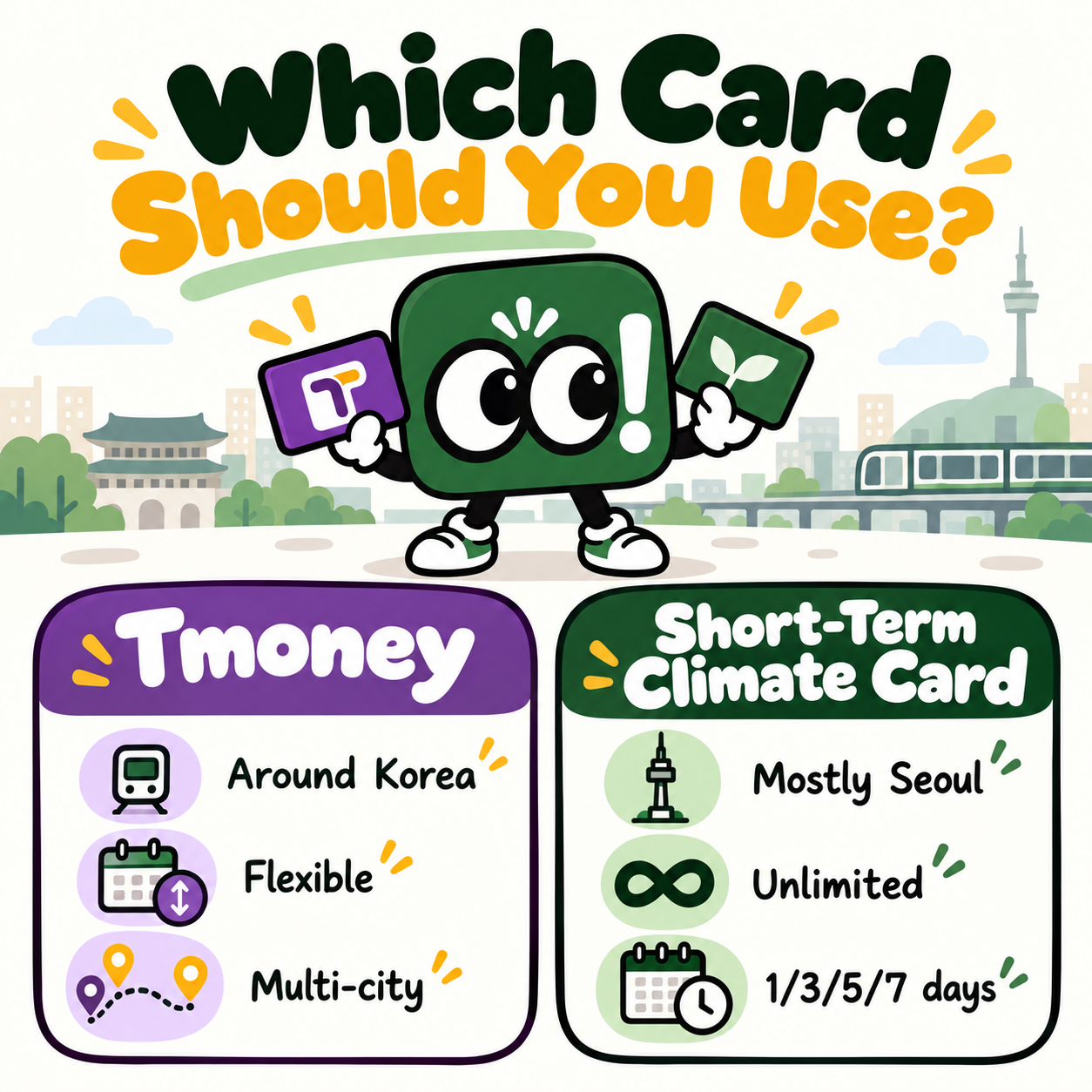
Traveling around Korea → Tmoney
Staying mostly in Seoul and using public transport a lot → Short-Term Climate Card

The old 30-day Climate Card is being phased out in 2026, but the 1-, 2-, 3-, 5- and 7-day passes for short-term visitors are staying.


 ⸻

What Changed With Seoul’s Climate Card in 2026?


This is where things get confusing: several transport programs with similar names now exist at the same time.
* August 31, 2026: Final recharge date for the old 30-day prepaid Climate Card
* September 1, 2026: Climate Pass launched for eligible Seoul residents
* Until September 29: Previously recharged 30-day prepaid Climate Cards can still be used
* Until September 30: Postpaid Climate Card fare benefits continue
* From October 1: The old 30-day Climate Card fare benefit ends

But there’s one important exception for visitors:

Short-Term Climate Card passes continue.

⸻

Which Transit Card Should Tourists Use?


For most international visitors, you can ignore most of the new program names.

Your practical choices are still Tmoney and the Short-Term Climate Card.

Tmoney is better if you:
✓ plan to travel outside Seoul
✓ are visiting several Korean cities
✓ only use public transport a few times a day
✓ want the most flexible option

Short-Term Climate Card is worth checking if you:
✓ are staying mainly in Seoul
✓ expect to use buses and subways frequently
✓ move between several Seoul neighborhoods in one day
✓ prefer a fixed transport cost

Short-Term Climate Card passes currently cost:
* 1 day — ₩5,000
* 2 days — ₩8,000
* 3 days — ₩10,000
* 5 days — ₩15,000
* 7 days — ₩20,000

The physical card itself costs an additional ₩3,000.

Tmoney versus Seoul Short-Term Climate Card for tourists in Korea


What About Climate Pass and K-Pass?


These programs are mainly relevant to people living in Korea, not ordinary short-term visitors.

Climate Pass is available to eligible Seoul residents and works through the K-Pass system.

Foreign residents may also be eligible if they have a foreigner registration number and meet the relevant residency requirements.

So if you’re simply visiting Seoul for a week or two, you generally don’t need to compare all of these resident programs.

Focus on:
Tmoney  or  Short-Term Climate Card


👀 Looky’s Local Tip


Don’t choose a transit card based on the card name.

Choose it based on where you’re actually going.

If you’re spending 3–7 days sightseeing mostly around Seoul and expect to take the subway or bus many times every day, check the Short-Term Climate Card.

If your itinerary includes other cities or areas outside Seoul, Tmoney is usually the simpler option.


Tourists Often Miss This: What Changes From October 1?


There’s an important change from October 1, 2026.

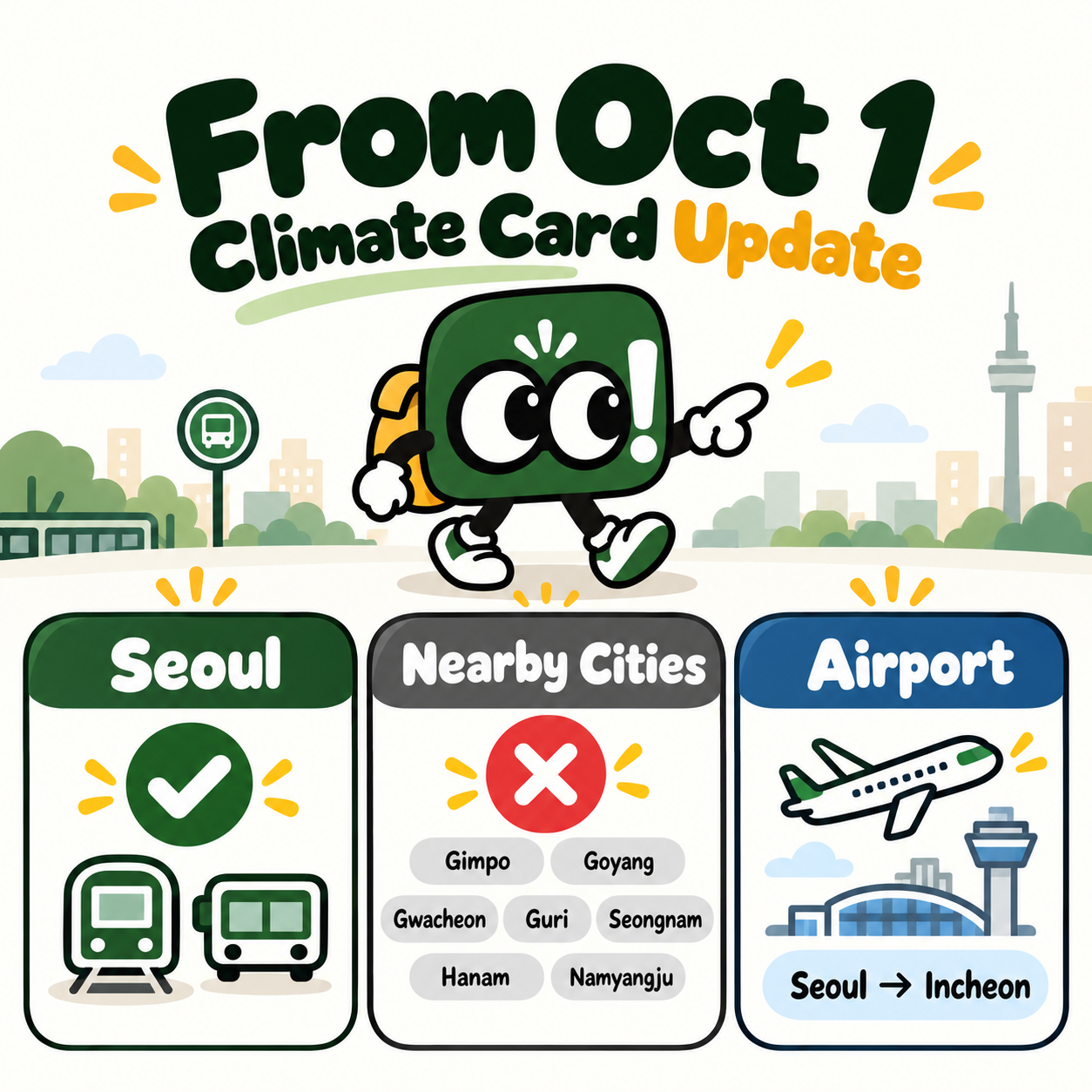
The Short-Term Climate Card will continue, but its coverage becomes more focused on Seoul.

You can still use it for travel within Seoul and for eligible trips ending at Incheon International Airport.

But you cannot board at Incheon Airport using the Climate Card.

Several areas that were previously included will no longer be covered by the short-term pass, including:

Gimpo, Goyang, Gwacheon, Guri, Seongnam, Hanam and Namyangju.

So don’t assume a Climate Card will cover every subway trip simply because your journey starts in Seoul.


Seoul Short-Term Climate Card coverage changes from October 2026


FAQ


Is the Climate Card being discontinued?

Not completely.
The old 30-day fare program is ending, but the Short-Term Climate Card continues.

Can tourists still buy a 7-day Climate Card?

Yes.
Short-term passes for 1, 2, 3, 5 and 7 days remain available.
The standard 7-day pass currently costs ₩20,000.


Is Climate Pass the new tourist Climate Card?

No.
Climate Pass is a resident-focused program.
Short-term visitors should generally compare Tmoney with the Short-Term Climate Card.

Can I use the Climate Card from Incheon Airport to Seoul?

No.
You can use an eligible Climate Card trip from Seoul to Incheon International Airport, but you cannot board the Airport Railroad at Incheon Airport using the Climate Card.


Which card is easiest for most tourists?

If you want maximum flexibility or plan  travel outside Seoul, Tmoney is usually the simpler choice.

If you’re staying mainly in Seoul and expect to use public transport heavily, check whether a Short-Term Climate Card fits your itinerary better.


⸻

Bottom Line


Traveling around Korea → Tmoney

Staying mostly in Seoul and riding buses and subways a lot → Check the Short-Term Climate Card

You don’t need to memorize Korea’s growing list of transit card names.

You just need the card that matches where you’re going.


tourist-vs-seoul-resident-transit-card-2026

👀 Looky says:

 "Don’t memorize the card names. Just choose the one made for your trip."


Sources & Last Updated
Last updated: September 27, 2026
* Seoul Metropolitan Government — Climate Card Official Guide
* Seoul Metropolitan Government — Climate Pass Launch & Climate Card Transition Q&A
* Seoul Metropolitan Government — Climate Pass Official Launch

Seoul Metropolitan Government — Climate Card Official Guide⁠

Climate Card -

The Climate Card is a comprehensive transportation card that provides unlimited use of public transportation (e.g., subway, bus), Ttareungi (Seoul Bike), and Hangang Bus for a period of 30 days after charging with a one-time fare.

english.seoul.go.kr


Seoul Metropolitan Government — Climate Pass & Climate Card Q&A⁠

SMG Steps Up Outreach Ahead of “Climate Pass” Launch on September 1, Encouraging Early Card Conversion -

The Seoul Metropolitan Government (SMG) announced that it will step up advance outreach for Everyone’s Card (Climate Pass), scheduled to launch on September 1, 2026. The new pass combines the nationwide public transportation fare refund benefits provided

english.seoul.go.kr


Look What I Found! — Korea Local Tips


반응형

+ Recent posts